
High-Throughput Embedded Architecture and DRAM Market Realities: Deploying the STM32H743VIT6
Industrial automation controllers, medical instrumentation, and edge vision systems operate under unforgiving real-time constraints. When developing these mission-critical systems, hardware engineers frequently grapple with the physical penalties of external bus interfaces, ranging from printed circuit board routing congestion to high-frequency electromagnetic interference.
Every supplementary dynamic memory module placed onto a dense circuit assembly introduces significant power dissipation, extra board area, and potential layout routing bottlenecks. At the same time, volatile conditions across the global dram market threaten production schedules through unexpected pricing spikes, capacity reallocations, and protracted lead times.
Navigating these combined architectural and logistical pressures demands a strategic migration toward high-density on-chip static RAM and deterministic computational engines. Selecting microcontrollers equipped with expansive internal memory allows engineering teams to execute complex firmware locally while insulating manufacturing roadmaps from peripheral component shortages.
Structural Supply Shifts Across the Global DRAM Market
Semiconductor fabrication foundries continue to shift advanced lithography capacity toward specialized artificial intelligence accelerators and high-density enterprise memory modules. This ongoing manufacturing retooling leaves mature fabrication lines constrained, creating persistent allocation bottlenecks for legacy dynamic random-access memory formats widely utilized throughout industrial automation ecosystems.
Unlike consumer hardware sectors that undergo annual product redesign cycles, mission-critical embedded infrastructure depends on multi-year operational consistency. Redesigning a printed circuit board away from legacy DDR3 or asynchronous SDRAM incurs substantial engineering overhead, layout respins, and extensive regulatory requalification delays.
Consequently, unpredictable lead times across the secondary dram market severely complicate production forecasting for original equipment manufacturers. Spot market price spikes and unannounced obsolescence notices force procurement teams to seek resilient hardware architectures that fundamentally reduce dependency on external dynamic memory devices.
Designers increasingly counter these supply chain disruptions by standardizing on microcontrollers that feature expansive internal memory topologies. Consolidating suitable workloads within on-chip memory can reduce dependence on external memory devices and simplify the memory-related portion of the bill of materials.
Eliminating external memory chips also simplifies power distribution networks across multilayer boards. Removing high-speed bus traces mitigates parasitic capacitance, diminishes electromagnetic radiation, and simplifies thermal management inside sealed industrial enclosures.
Core Microarchitecture and Capabilities of the STM32H743VIT6
Engineered to overcome demanding computational bottlenecks, the STM32H743VIT6 integrates high processing speeds with an advanced internal bus matrix. Powered by an Arm Cortex-M7 core operating at frequencies up to 480 MHz, this high-performance microcontroller delivers up to 1027 DMIPS for complex signal processing, motor regulation, and edge data analytics.
The device integrates 2 MB of dual-bank Flash memory and up to 1 MB of RAM, including 192 KB of TCM RAM, up to 864 KB of user SRAM, and 4 KB of backup SRAM. This generous memory capacity allows developers to run complex graphical interfaces, deep networking stacks, and real-time operating systems without needing peripheral memory chips.
The device includes 192 KB of TCM RAM, comprising 64 KB of ITCM and 128 KB of DTCM. These tightly coupled memory regions can be used for time-critical code and data, helping reduce access latency and contention with other bus masters.
When expanded data buffering becomes unavoidable for specific applications, an integrated flexible memory controller connects external memory resources effortlessly. The peripheral supports 8-bit, 16-bit, and 32-bit interfaces for SDRAM, SRAM, NOR Flash, and PSRAM devices, running at bus clock speeds reaching 100 MHz.
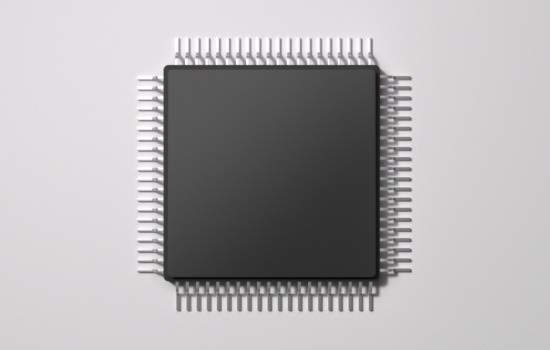
Housed in a 100-pin LQFP package measuring 14 by 14 mm, the controller operates reliably between -40°C and +85°C. Hardware acceleration, including a Chrom-ART graphic accelerator and a JPEG decoder, offloads processing cycles for smooth visual rendering.
Dual-mode Quad-SPI interfaces and direct memory access controllers further accelerate throughput across peripherals. This balanced architecture ensures communication nodes operate smoothly without overloading the primary computational core.
Strategic Sourcing and Long-Term System Lifecycle Protection
Deploying high-performance processing silicon in long-lifecycle embedded equipment demands tight collaboration between design engineers and procurement specialists. Specifying the STM32H743VIT6 provides technical flexibility, as its versatile memory controller accommodates alternative memory configurations if primary peripheral parts face unexpected factory de-commitments or extended delays.
Supply volatility across peripheral analog ICs, discrete semiconductors, and passive arrays can abruptly halt assembly operations. Manufacturing enterprises therefore require comprehensive component coverage across every tier of their bill of materials to maintain predictable production throughput.
To resolve these inventory hurdles, Unibetter distributes a wide range of electronic components across automotive computing, industrial automation, telecommunications, and smart energy sectors. This broad distribution capability allows purchasing organizations to consolidate component sourcing across diverse active and passive product families.
Securing genuine silicon is particularly critical during market allocation cycles when substandard and remarked components proliferate across open broker platforms. Incorporating unverified parts risks intermittent field failures, elevated thermal breakdown, and disastrous product recalls that undermine brand trust.
UniBetter sources electronic components through a combination of authorized distribution channels and independent sourcing networks, with supplier evaluation and inspection procedures designed to help assess product authenticity and condition. We ensure that every component follows the manufacturer’s electrical requirements and has a full history of factory traceability by using stringent incoming inspection methods.
With fluctuating spot prices and ongoing component shortages, Unibetter helps manufacturers source critical processing chips and peripheral components at competitive prices through its established global supplier and logistics network. By combining flexible procurement with efficient distribution, they help customers manage purchasing costs, protect profit margins, and minimize production delays when supply is tight.
Safeguarding Edge Hardware Against Supply Headwinds
Succeeding in the competitive embedded systems landscape requires hardware teams to treat component availability as a primary design constraint rather than a secondary purchasing concern. Choosing microcontrollers engineered with generous internal memory configurations and versatile bus interfaces provides critical operational headroom when peripheral memory availability tightens unexpectedly.
Consolidating firmware operations within on-chip memory arrays eliminates external routing complexity while establishing vital technical resilience against market instability. This design approach reduces assembly failure risks, minimizes board footprint, and lowers total cost of ownership across multi-year deployments.
Pairing resilient board architecture with disciplined component procurement transforms supply chain uncertainty into a lasting operational advantage. Establishing reliable sourcing partnerships ensures long-term lifecycle stability, safeguarding industrial hardware programs from engineering redesigns, counterfeit components, and disruptive manufacturing shutdowns.