
Marbella vs. Other Costa del Sol Towns: Which Spanish Beach City Is Right for You?
Choosing where to live or spend long stretches of time on the Costa del Sol is a big decision. The coastline stretches for around 150 km and every town has its own character, prices and lifestyle. “Marbella vs. other Costa del Sol towns: which Spanish beach city is right for you?” is a question many expats, retirees, remote workers and investors ask once they fall in love with southern Spain’s sun and sea.
If you are already considering Living in Marbella as an Expat, you may find this guide particularly useful: Living in Marbella as an Expat
Below you’ll find a detailed, easy-to-read comparison of Marbella with other major Costa del Sol destinations such as Málaga, Fuengirola, Benalmádena, Estepona, Torremolinos and Nerja. The aim is to help you understand not only prices and amenities, but also less obvious aspects: daily rhythm, atmosphere, community, and long-term quality of life.
Understanding the Costa del Sol: A Quick Overview
The Costa del Sol, in the province of Málaga, is one of Europe’s most popular coastal regions, known for over 300 days of sunshine a year, mild winters and warm summers. Direct flights from much of Europe make it an easy base for expats and digital nomads. Yet, within an hour’s drive, you can move from a sophisticated resort town to a traditional fishing village or a vibrant small city.
Some key facts that shape life along this coast:
- Climate: Mediterranean, with mild, wet winters and hot, dry summers. Coastal towns benefit from cooling sea breezes.
- Tourism: Around 13–14 million visitors come to the Costa del Sol each year, meaning some towns feel very seasonal.
- International communities: In several municipalities, foreign residents make up 30–40% or more of the population.
- Infrastructure: The A-7 coastal road and AP-7 toll motorway connect most towns; Málaga Airport is the main gateway.
Marbella is often perceived as the “luxury” option, but that image only tells part of the story. To compare Marbella vs. other Costa del Sol towns, it helps to look at lifestyle, cost of living, beaches and opportunities in a structured way.
Marbella vs. Other Costa del Sol Towns: Lifestyle and Atmosphere
Marbella: Glamour, Golf and Cosmopolitan Living
Marbella is famous for its polished marina areas, beach clubs and upscale restaurants, but that is only one part of its personality. The town actually blends three overlapping “worlds”:
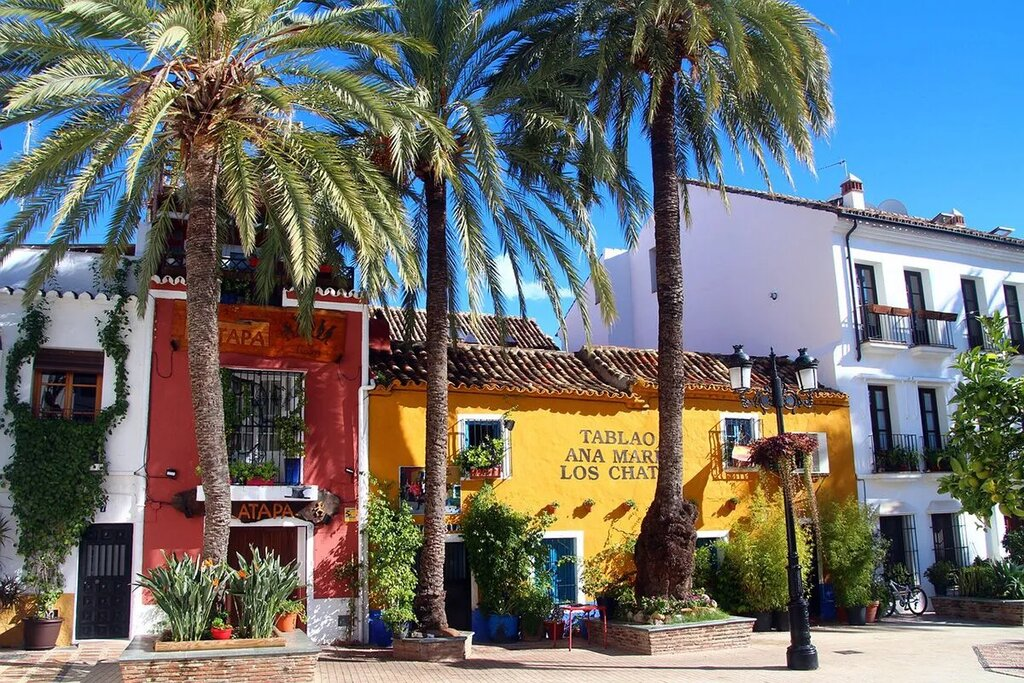
- Old Town (Casco Antiguo): Narrow streets, whitewashed houses and orange trees in Plaza de los Naranjos give a truly Andalusian feel. Here you find tapas bars, local shops and a slower rhythm that surprises many who assume Marbella is only about luxury.
- Golden Mile & Puerto Banús: This is the iconic, glamorous side: luxury yachts, designer boutiques, fine dining and a lively nightlife. It attracts international visitors, wealthy second-home owners and a seasonal party crowd.
- Residential suburbs and golf valleys: Up in Nueva Andalucía, Guadalmina, Elviria and surrounding urbanisations, you find gated communities, golf courses and international schools. Life here is quieter, very expat-friendly and oriented to long-term residents.
Overall, Marbella offers a cosmopolitan, international lifestyle, strong English-speaking services, and a wide social scene for expats, entrepreneurs and families. It feels polished, safe and well-equipped, but that also means busier roads and higher prices.
Málaga City: Culture, Work Opportunities and Urban Energy
When comparing Marbella vs. Málaga, the contrast is immediate. Málaga is a real working Spanish city with over half a million residents, a large port, museums, a compact historic center and a growing tech sector.
- Lifestyle: More urban, with a vibrant cultural calendar (festivals, concerts, theatres, art museums like the Picasso and Pompidou), generous pedestrian areas and an excellent restaurant scene.
- Beaches: City beaches like La Malagueta and Pedregalejo are pleasant but not as “resort-style” as those near Marbella.
- Job market: Better for people seeking local employment, especially in technology, tourism, education and services.
- Atmosphere: More Spanish-language immersion, younger population, and less of a “resort bubble”.
If you want a dynamic city with a beach and are comfortable with more Spanish usage day to day, Málaga can be more stimulating and often more affordable than Marbella.
Fuengirola & Benalmádena: Family-Friendly and Accessible
Fuengirola and Benalmádena sit roughly between Marbella and Málaga, both geographically and in lifestyle. When you think of Marbella vs. other Costa del Sol towns for families, these two often come up.
- Fuengirola: Flat, walkable, with a long seafront promenade, parks and a large foreign community. Many British, Scandinavian and Irish residents. It has numerous international schools and tends to be more budget-friendly, especially for apartments.
- Benalmádena: Divided into the coastal zone, the marina area, and Benalmádena Pueblo (a white village up on the hill). It offers family attractions, a good choice of housing and easier access to Málaga Airport.
Both towns feel lively and practical, with plenty of shops, healthcare options and social clubs. They are less “exclusive” than Marbella but also less expensive, and they retain a strong holiday-resort feel in high season.
Estepona & Nerja: Quiet Charm and Traditional Spain
If you picture Marbella vs. Estepona or Marbella vs. Nerja, the key difference is usually the pace of life and level of tourism intensity.
- Estepona: Once a sleepy fishing town, now upgraded with attractive promenades, murals and gardens. It is quieter than Marbella but increasingly sophisticated, with good restaurants and a growing expat population. Many people see it as a “more relaxed Marbella” with a village-like feeling.
- Nerja: On the eastern side of the Costa del Sol, Nerja is known for its dramatic cliffs, coves and the Balcón de Europa viewpoint. It has a more traditional Spanish atmosphere and slightly cooler temperatures due to its geography. Tourism is strong but the town still feels intimate.
These towns appeal to people seeking calmer, more traditional surroundings, while still having international neighbors and modern conveniences.
Cost of Living: Is Marbella Really More Expensive?
In any comparison of Marbella vs. other Costa del Sol towns: which Spanish beach city is right for you, cost of living is central. Marbella is generally more expensive, but the difference depends on your lifestyle.
Housing (approximate tendencies):
- Marbella: Highest prices per square meter, especially near the beach, golf courses and in gated communities. Villas and luxury apartments dominate many neighborhoods.
- Málaga, Benalmádena, Fuengirola: Mid-range prices, good supply of apartments and some townhouses. Better value if you are willing to be a little inland.
- Estepona, Torremolinos, Nerja: Often more affordable than Marbella, though frontline sea views still command premium prices.
Everyday expenses:
- Groceries and basic services are quite similar across towns, with large supermarkets present everywhere.
- Eating out in Marbella’s prime locations can be 20–40% higher than a comparable meal in more local spots in Málaga or Nerja.
- Public transport is cheaper if you live near good bus or train connections, particularly between Málaga, Torremolinos, Benalmádena and Fuengirola.
If you are cost-sensitive, you might choose to live slightly outside Marbella and commute in for work or leisure, or focus on towns like Fuengirola or Estepona that balance value with amenities.
Beaches, Climate and Outdoor Life on the Costa del Sol
Marbella’s Beachfront and Microclimate
One of Marbella’s biggest strengths in the Marbella vs. other Costa del Sol towns debate is its microclimate. Protected by the Sierra Blanca mountains, Marbella often experiences:
- Slightly milder winters than more exposed areas
- Slightly cooler summer evenings
- Less wind on many days
The beachfront varies from stylish beach clubs and lounges to more relaxed chiringuitos (beach bars) and family areas. A continuous promenade lets you walk or cycle for kilometers, connecting different neighborhoods and giving a strong sense of “coastal lifestyle” all year round.
For outdoor enthusiasts, Marbella adds:
- Dozens of golf courses within a short drive
- Hiking trails in the nearby mountains
- Water sports, sailing, paddleboarding and more
How Other Towns Compare for Nature Lovers
- Nerja: Fantastic for people who love more wild scenery. The nearby Sierras de Tejeda, Almijara y Alhama natural park provides hiking, while the coastline has coves and cliffs instead of only long sandy beaches.
- Estepona: Offers long, well-kept beaches and proximity to both mountains and the Strait of Gibraltar. Good for walkers and cyclists.
- Málaga, Torremolinos, Fuengirola, Benalmádena: Beaches are typically long and urban, well-equipped with promenades. Mountains are still close, but the feeling is more “city by the sea” than resort-with-nature.
If your vision of living in Spain involves beach walks, golfing, mild winters and easy access to nature, Marbella and Estepona tend to score very highly, with Nerja best for dramatic landscapes.
Working, Studying and Doing Business: Where Will You Thrive?
In deciding which Spanish beach city is right for you, think about your work or study situation:
- Remote workers and digital nomads: Marbella, Málaga and Fuengirola have co-working spaces and strong fiber internet coverage. Málaga adds a growing tech hub and more networking opportunities, while Marbella appeals to entrepreneurs and high-net-worth individuals.
- Families with school-age children: Marbella has one of the highest concentrations of international schools on the coast, with British, American, Scandinavian and other curricula. Benalmádena and Fuengirola also have options, but with slightly less variety.
- Local employment: Málaga City offers more opportunities beyond tourism and hospitality, especially in tech, logistics, culture and public services. Marbella’s job market is closely tied to real estate, hospitality, luxury services and wellness.
If your income is international or remote, you can prioritize lifestyle and housing. If you depend on local employment, comparing Marbella vs. Málaga carefully is essential, as Málaga often has a broader economy.
Marbella vs. Other Costa del Sol Towns for Different Types of Expats
To simplify the decision, imagine these broad profiles and where they often fit best:
- Young professionals and entrepreneurs
- Prefer: Marbella or Málaga
- Why: Networking, nightlife, international communities, good transport and co-working spaces.
- Families with children
- Prefer: Marbella, Benalmádena, Fuengirola, Estepona
- Why: International schools, parks, sports facilities, safe neighborhoods, plenty of child-friendly amenities.
- Retirees seeking calm and comfort
- Prefer: Marbella outskirts, Estepona, Nerja
- Why: Quiet areas, good healthcare access, strong expat support networks, relaxed daily rhythm.
- Budget-conscious expats and students
- Prefer: Málaga, Torremolinos, Fuengirola
- Why: Lower rents, good public transport, more “local” pricing in bars and restaurants.
In many ways, Marbella sits at the premium end of the spectrum: ideal if you want comfort, services and an international bubble, and are ready to pay for it. Other towns trade some of that polish for lower prices, a more Spanish feel, or a quieter life.
How to Decide: Questions to Ask Before Choosing Your Spanish Beach City
To resolve the Marbella vs. other Costa del Sol towns dilemma, ask yourself:
- How important is an international, English-speaking environment? If it is crucial, Marbella, Fuengirola and Benalmádena are strongest. For more Spanish immersion, look to Málaga, Nerja or Estepona town center.
- What is my real budget for housing and daily life? Be honest about long-term affordability. Marbella offers wonderful quality of life but at a premium in many areas.
- Do I want urban energy, resort-style living or village charm?
- Urban: Málaga
- Resort / cosmopolitan: Marbella, Benalmádena, Fuengirola
- Village charm: Estepona, Nerja, Marbella Old Town
- Will I rely on local work or do I bring my own income? Local work often points towards Málaga; remote income gives you more freedom to choose purely on lifestyle.
- How sensitive am I to crowds and tourism? All Costa del Sol towns get busier in summer, but Marbella, Torremolinos and Fuengirola feel the seasonal surge more than some quieter pockets of Estepona or Nerja.
Conclusion: Marbella vs. Other Costa del Sol Towns – Finding Your Perfect Fit
When you weigh Marbella vs. other Costa del Sol towns: which Spanish beach city is right for you?, there is no single “best” answer—only the best fit for your priorities. Marbella stands out for its combination of microclimate, international community, high-end services, golf and beachfront lifestyle. It suits those who value comfort, prestige and convenience, and who are comfortable with a higher price tag.
Málaga offers culture, jobs and a real city buzz. Fuengirola and Benalmádena balance affordability and family-friendly infrastructure. Estepona and Nerja bring calmer, more traditional charm, with beautiful surroundings and growing expat communities.
The most reliable approach is to list what matters most to you—budget, language environment, urban vs. quiet, schools, nature—and test each town against those criteria. With clear priorities, you will quickly see whether Marbella or another Costa del Sol destination truly feels like home.