
Optimizing Factory Control Cabinets with DIN Rail Installation and Space-Saving Inverter Design
Factory automation systems often require more control components within increasingly limited cabinet spaces. As manufacturers add sensors, controllers, communication modules, and drive equipment, traditional inverter solutions may create challenges related to installation space, wiring complexity, and maintenance efficiency. A compact design combined with flexible installation methods has become an important consideration for industrial equipment builders seeking more efficient panel layouts.
For machine builders and system integrators, selecting the right drive solution can directly influence cabinet design and overall system performance. A modern smart electric drive needs to provide reliable motor control while simplifying integration. Features such as DIN rail compatibility, reduced dimensions, and convenient parameter configuration help manufacturers create cleaner and more efficient control panels.
Why Factory Panels Need More Compact Drive Solutions
Control cabinets are becoming more complex as industrial equipment moves toward higher levels of automation. Space inside electrical panels must accommodate multiple devices, including programmable controllers, power supplies, communication components, and motor control units. Larger components can increase cabinet size, raise material costs, and make maintenance more difficult.
A compact inverter helps address these challenges by reducing the physical footprint required for motor control. Instead of redesigning entire cabinets to accommodate larger drives, manufacturers can integrate smaller units while maintaining required functionality. This approach is especially valuable for equipment with limited installation areas, such as packaging machines, conveyors, pumps, and production line equipment.
Beyond saving physical space, compact designs can improve engineering efficiency. Smaller devices allow more flexible component arrangements, shorter wiring paths, and easier access during installation or service. For industrial users, these benefits contribute to reduced setup time and improved cabinet utilization.
DIN Rail Mounting Simplifies Control Cabinet Integration
Traditional inverter installation often requires dedicated mounting structures and additional space planning inside electrical cabinets. By adopting DIN rail mounting, manufacturers can simplify mechanical installation and create more standardized panel designs.
DIN rails are widely used in industrial control systems because they provide a practical method for installing electrical components. When an inverter supports this mounting approach, engineers can integrate it into existing cabinet structures without extensive modifications. This reduces installation complexity and helps shorten project preparation time.
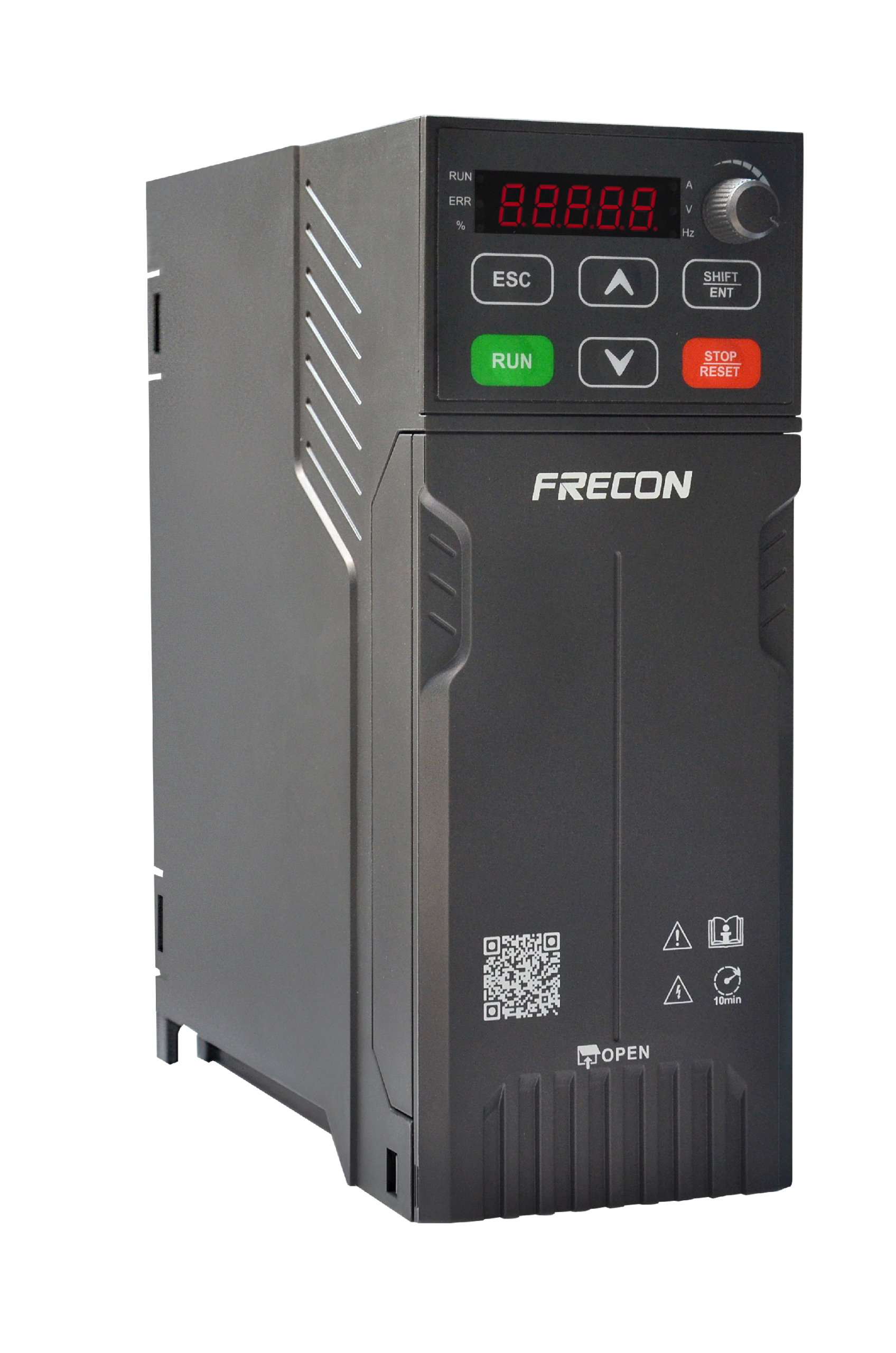
The FR01 Series Smart Inverter from FRECON is designed with compatibility for standard rail installation, allowing quick wiring and easier integration into common control cabinet layouts. The design supports efficient installation while reducing the need for complicated modifications during system assembly.
For OEMs producing different machine models, this flexibility can be particularly useful. A standardized installation method enables engineers to develop repeatable cabinet designs and streamline production processes across multiple equipment platforms.
Combining Compact Size with Advanced Motor Control
A smaller inverter does not necessarily mean fewer functions. Industrial users increasingly expect drive equipment to provide accurate control, convenient operation, and reliable performance within a limited footprint. This is where a well-designed smart electric drive solution can offer advantages.
The FR01 Series Smart Inverter features a book-type narrow body design that helps reduce installation space requirements. It incorporates built-in SVC and V/F control to support precise speed regulation and stable equipment operation. The series also includes functions such as parameter copying, electronic jumper design, and a detachable keypad to improve configuration efficiency.
For manufacturers, these functions can simplify commissioning and reduce adjustment time during equipment deployment. Engineers can complete parameter settings more efficiently, while operators benefit from a more user-friendly control experience.
The FR01 Series also supports side-by-side installation with zero spacing, helping maximize cabinet space utilization. This feature allows multiple drives to be arranged more efficiently, which is valuable for systems requiring several motor control points within one panel.
Improving Equipment Design with a Space-Efficient Inverter Approach
When selecting a compact inverter, industrial users need to consider more than size alone. Reliable operation, environmental adaptability, and ease of maintenance are also important factors. A smaller drive must still provide stable performance under different operating conditions.
The FR01 Series addresses these requirements through an independent air duct design and enhanced conformal coating. These features help improve protection against dust, moisture, and other challenging industrial conditions. Such design considerations allow the inverter to support applications in areas including fans, pumps, food processing equipment, woodworking machinery, and material handling systems.
For system integrators, combining compact dimensions with protective design features can reduce installation limitations. Equipment designers can create smaller panels without sacrificing operational reliability, supporting more flexible machine configurations.
Supporting Future Factory Automation Requirements
As factories continue moving toward smarter and more connected production environments, drive components need to adapt to changing requirements. A modern smart electric drive is expected to provide not only motor speed control but also easier integration, efficient operation, and improved user experience.
Compact inverter solutions with flexible installation options can support manufacturers in developing more efficient automation systems. By reducing panel space requirements and simplifying installation procedures, these solutions help improve engineering workflows while meeting the demands of modern industrial applications.
FRECON’s FR01 Series Smart Inverter demonstrates how compact design and practical installation features can work together. With DIN rail compatibility, a narrow-body structure, built-in control functions, and flexible application capabilities, the series provides an option for manufacturers looking to optimize factory panel designs.
Creating More Efficient Panels Through Smarter Drive Selection
Optimizing factory panel space requires a balance between performance, installation convenience, and equipment reliability. Technologies such as DIN rail mounting and compact drive structures allow manufacturers to create more efficient control cabinets while simplifying system integration.
By adopting solutions like FRECON’s FR01 Series Smart Inverter, industrial equipment builders can achieve more flexible panel layouts and improve installation efficiency. As automation systems continue evolving, compact and adaptable drive technologies will remain an important part of building smarter, more efficient factory environments.